
This article explores how regulations like the CRA and NIS2 impact development risk management. We examine why threat modeling is the industry-standard solution and demonstrate its practical application for developers, AppSec leads, and CTOs alike.
Already familiar with the basics? This piece builds on our earlier article, “Threat Modeling: A Gate to Secure Development Culture“ which covers the cultural foundations and a phased approach to getting started.
1. What the NIS 2 and CRA regulations require in terms of risk management
Neither CRA nor NIS2 uses the phrase “threat modeling” explicitly. What they do require, however, maps almost perfectly to what threat modeling produces.
The Cyber Resilience Act (CRA)
The CRA entered into force in December 2024 and will apply to any product with digital elements placed on the EU market by December 2027. Its core obligation is secure-by-design: security must be built in from the start, not bolted on after deployment.
Concretely, the CRA requires manufacturers to:1
- Assess cybersecurity risks as part of the product development process
- Document security decisions and their rationale
- Ensure vulnerabilities are identified and addressed throughout the lifecycle
- Apply the principle of security by default/design
Each of these requirements corresponds directly to an output of a well-run threat modeling process: a risk register, documented design decisions, identified attack vectors, and architectural mitigations.
NIS2
NIS2 applies to essential and important entities across critical sectors and extends security obligations deeper into supply chains than its predecessor. Among its risk management requirements:
- Security must be addressed in the development of systems and services
- Risks from suppliers and third-party components must be assessed
- Incidents must be preventable where possible through proactive risk management
Again, threat modeling is one of the few structured techniques that produces the evidence these obligations call for; particularly around supply chain risk and proactive architectural decision-making.
2. From good practice to compliance evidence
Here’s where many teams fall short: they do threat modeling as an exercise, but they don’t treat it as a compliance artifact. The difference matters. A threat model produced as a whiteboard conversation is valuable for the team. A threat model that is documented, versioned, linked to architectural decisions, and revisited when the system changes become evidence.
What that means in practice:
- Traceability: Each identified threat should link to a mitigation decision or an accepted risk. “We identified this attack vector, here is what we did about it” is the sentence your compliance documentation needs to be able to produce.
- Repeatability: A one-off model for a single feature does not satisfy ongoing CRA obligations. Teams need a lightweight, repeatable process that can be applied at each design phase.
- Versioning: When the system changes, the threat model must change with it. This requires treating TM outputs as living documents, not snapshots.
- Coverage: CRA’s scope includes third-party components and dependencies. Threat modeling must extend beyond your own code to the libraries, APIs, and services your product relies on.
The gap between “we do threat modeling” and “we can demonstrate we do threat modeling” is precisely where CRA and NIS2 will expose unprepared teams. You must show you have thought about risk before you shipped.
What it looks like for each role
While people with all types of experiences have their place in the activity, what it means and what it demands differs depending on where you sit.
For developers and engineers
The good news: you don’t need to become a security expert2. Threat modeling at the developer level is about the habit of asking “what could go wrong?” before writing code, not after.
In practice this could mean:
- Running a 30-60 minute structured conversation at the start of a new feature or significant change
- Using a simple framework like STRIDE or the 4 questions framework to guide the discussion
- Capturing threats and agreed mitigations in a lightweight template, linked to the relevant ticket or story
- Flagging unresolved risks explicitly rather than leaving them implicit
The output doesn’t need to be a formal document. It needs to be findable, attributable, and honest about what was considered and what was decided.
For AppSec/Security leads
Your role shifts from doing threat modeling to enabling it at scale. Under CRA obligations, the question you need to answer is: can every team, for every significant feature, produce a threat model that a regulator could examine?
That requires a standardized process that doesn’t require security expertise to execute (templates, checklists, lightweight facilitation guides, training materials), but also making sure this integrates well into existing development rituals such as design reviews, sprint planning, architecture review boards, …
For you, threat modeling is a way to aggregate threats across teams to identify systemic risks and recurring patterns.
Threat modeling also gives AppSec leads something they often lack: a structured way to prioritize. Not every threat needs the same response. A documented, risk-ranked backlog of security issues is far more defensible and actionable than an undifferentiated list of findings.
For CTOs and CISOs
The CRA creates personal accountability for senior leaders in ways that previous frameworks largely did not. Secure-by-design is now a product compliance requirement with potential market access implications. You have to make sure that you are on track by asking your teams:
- Do we have a documented process for assessing security risks at design time?
- Can we produce evidence that we identified and addressed threats for our most recent major release?
- Does our supplier and dependency assessment include security risk criteria?
- Is our threat modeling process integrated into our SDLC, or does it exist as a parallel activity that gets skipped under time pressure?
Investing in threat modeling capability now is becoming a market differentiator as customers and partners now look into the security posture of their software suppliers. Think about the practical consequence of not being able to demonstrate compliance when a prospect’s procurement team asks for it.
Building the compliance bridge: a practical path
If your team is just getting started, “Threat Modeling: A Gate to Secure Development Culture” walks through the cultural shift and phased approach. This article picks up where that one ends.
If your team already has threat modeling in some form, even informally, the path to compliance-grade practice is shorter than you might think. It is mostly about systematizing what you already do.
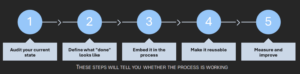
Compliance-grade practice is shorter than you might think. It is mostly about systematizing what you already do.
The Bottom Line
Threat modeling has always been one of the highest-leverage investments a development team can make, it is a cornerstone into the ‘shift-left’ mindset. CRA and NIS2 have now made it non-optional for a large share of the market.
The teams that will navigate this transition most smoothly are the ones that have embedded threat modeling as a normal part of how they design and build software. Not a compliance exercise conducted under pressure, but a habit that produces better software as a side effect.
The good news: you don’t need to build that habit alone. Frameworks exist and (some) tools are lightweight. The expertise is also available.
What it takes is the decision to start.